

2025 IMPACT REPORT
Navigating a challenging year, guided by our strategic plan
Rhode Island Food System Highlights

$17.8B
Total food system sales. Food system jobs account for 12.2% of all jobs in Rhode Island, or 70,744 positions.

11.6%
Rhode Island households food insecure from 2001 to 2023, more than 35,000 households.

179,506
Rhode Islanders receiving SNAP benefits. An average of 84,800 people use the RI Community Food Bank and its pantry network each month.

$20K+
Average price per acre for farmland in Rhode Island. The state is home to 1,054 farms and 59,076 acres in production.

$100M+
Total value of seafood landed annually by Rhode Island fishers. Aquaculture sales total nearly $8M.

8 of top 10
Of the warmest years on record for Rhode Island have happened since 2010. The highest concentration of hot days (90+ degrees) occurred between 2015–2020.
Letter from network director Nessa Richman

A Roller Coaster Year
The strength of our network lies in its members. You continue to show up — especially when times are tough — to work collaboratively to make our local food system more just and resilient.
RIFPC’s Strategic Objectives 2023-2025

Increase food access, security, justice, and sovereignty for marginalized Rhode Islanders by coordinating and advocating for changes that enable all people to eat healthy, nutritious, culturally and religiously appropriate food of their own choice, regardless of zip code.
Support the economic strength and resilience of RI food businesses, especially those that have been historically under-served and/or under-resourced.
Create, contribute to, and advocate for policy that integrates climate, justice, environment, and food recovery in a way that centers social responsibility and economic equity at the municipal, state and federal levels.
Provide leadership, resources, and direction to state food system planning and policymaking in alignment with RIFPC’s commitment to equity.
Empower the network – current Council, Council alumni, and the broader network – to build community power and affect positive change in alignment with our mission.
2025 Highlights
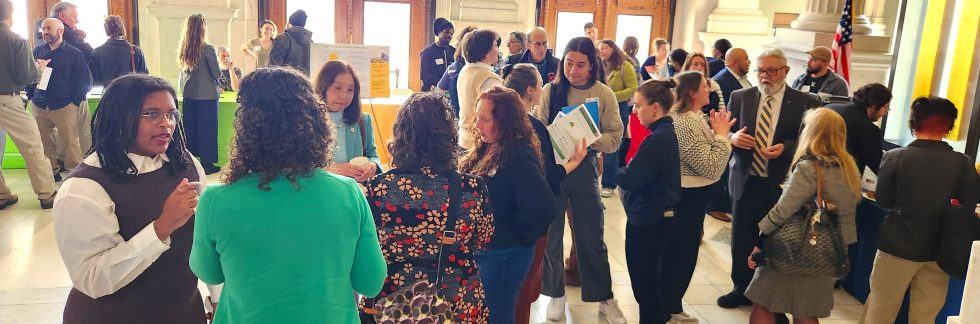
Strengthening our engagement with elected officials
Read More
“Rhode Island currently only grows about three percent of its own food, making us heavily reliant on outside supply chains,” Senator Linda Ujifusa (District 11) noted in presenting the Senate’s citation. “And although access to fresh, healthy food is a key social determinant of health, too many Rhode Islanders lack it. That’s why the Rhode Island Food Policy Council is so important.”
Also in March, two RIFPC staff members traveled to Washington, DC to attend the winter meeting and lobbying day held by National Sustainable Agriculture Coalition, which RIFPC joined in 2023. Meeting with Rhode Island’s two senators and two representatives, Nessa Richman and Max Mason De Faria asked the legislators to do all they could in the midst of federal funding freezes and executive orders from the Trump administration that impact farmers, fishers, and people facing food insecurity.
In November, we hosted our annual Farm Visit for legislators at Tilted Barn Brewery, a past recipient of the Local Agriculture and Seafood Act award. Elected officials attending the event included Representative Michelle McGaw and Senator Sue Sosnowski, our 2025 Changemaker Award winners. Sosnowski and McGaw join previous awardees—Senators Lou DiPalma and Tiara Mack and Representatives Carol Hagan McEntee and Terri Cortvriend—as champions of a more just and resilient food system.
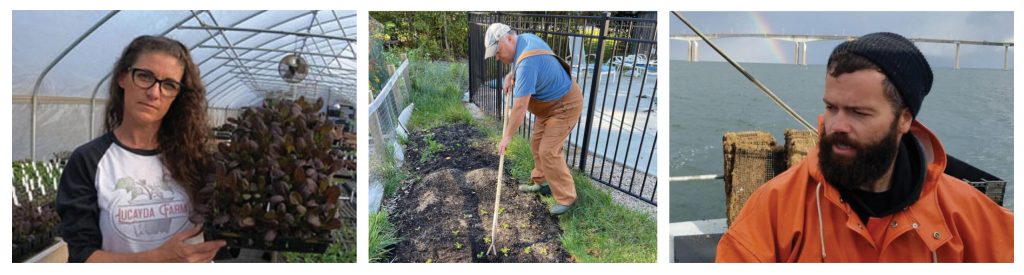
Building resources, support for food businesses
Read More
In 2025 we were proud to launch a resource aimed at supporting farmers, fishers, and other Rhode Island-based food entrepreneurs. The Business Support resource hub is a one-stop directory that includes 20-plus groups offering valuable training and services free of charge. We are updating the hub regularly with new opportunities.
In March, Rhode Island’s Department of Environmental Management awarded 33 local farmers, fishers, and specialty food producers with grants totaling $486,000. The annual Agriculture and Seafood Act (LASA) grants support the growth, development, and marketing of local farms, seafood harvesters, and food businesses. This twelfth year of LASA funding was likely more important than ever in supporting the state’s local food industry, as Governor Dan McKee noted at an event at Farm Fresh Rhode Island headquarters. “Given the unpredictability of federal funding support, state-led investment is critical to providing stability for our farmers, fishers, and food producers, while strengthening our state’s food security and economic resilience.”
“LASA is an amazing program,” says Maggie Longo, a Rhode Island Food Policy Council member who consults annually with interested applicants to help shape their funding requests and submit the applications for the last three years. The state’s online platform for the grant applications can be challenging to navigate, Longo says, and many applicants need assistance making their pitch for up to $20,000 in grants. “It’s an opportunity to think about their business,” Longo says of her assistance. “I help them articulate how that new tiller or other equipment will drive their business forward. I teach them to think that way.”
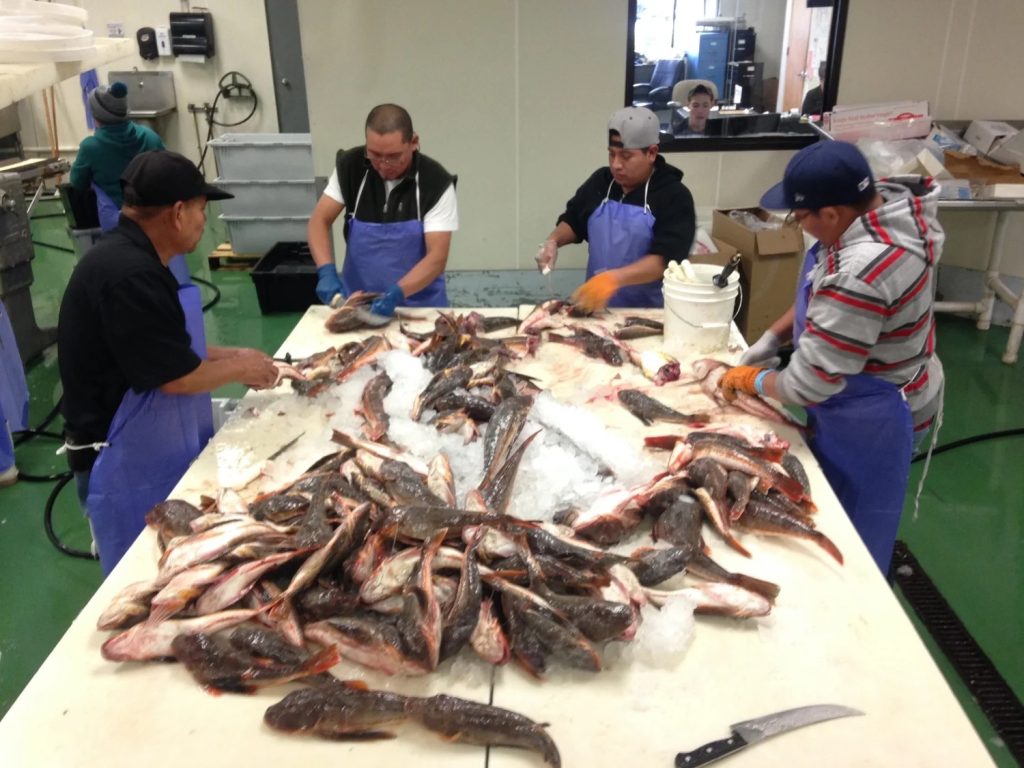
Photo: Seafood For All/Eating with the Ecosystem
Connecting local farmers and fishers with residents in need
Read More
A three-year USDA Local Food Promotion Program implementation grant funding the Rhody Feeding Rhody Alliance wrapped up in September 2025. Partnering with Farm Fresh RI, Southside Community Land Trust, and the Commercial Fisheries Center of RI, RIFPC formed the Alliance to build sustainable market channels between local farmers and fishers and Rhode Island residents in need of fresh, local, culturally appropriate food.
In its three years of operation, the program boasted hefty numbers with significant impact, including:
- $1,339,322 in purchases from 273 R.I. farmers, fishers, & other food producers
- 187 new direct producer-to-consumer market access points established
- 168 RI emergency food access points offering more local food
- 80,537 food-insecure RI consumers accessed fresh, local food
- 181 jobs created and maintained
Late in 2025, the Council joined forces with United Way of Rhode Island to continue and broaden the work of the Alliance to address emerging food access needs. The entire Alliance will meet quarterly while three work groups meet separately to focus on supply chain issues, communication to community-based agencies, and policy and advocacy. Thanks to Rhody Feeding Rhody, the state’s local emergency feeding system “has become a larger, more reliable wholesale market for local producers and harvesters while also becoming more resilient to supply chain shocks from public health emergencies and climate-related disasters,” says Rachel Newman Greene, RIFPC associate director for network.
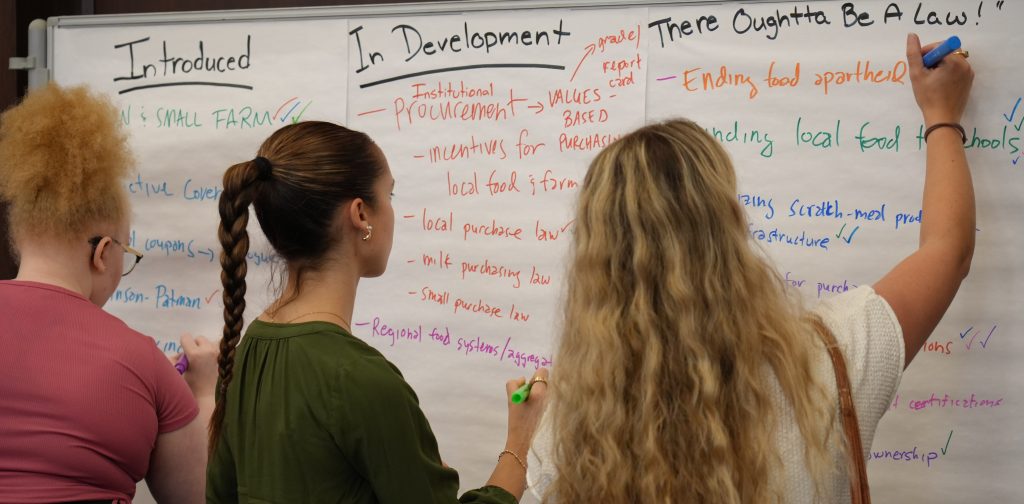
Convening our largest gathering to brainstorm food policy
Read More
The day began with an address from Lieutenant Governor Sabina Matos, who shared information on her office’s “Fair Price Grocery Agenda,” a four-bill legislative package that addresses supply-chain fairness, digital pricing and consumer protections, and food deserts. “Council members were excited about how the legislation could lead to a fairer environment for food businesses while increasing Rhode Islanders’ access to fresh foods,” says RIFPC Associate Director for Network Rachel Newman Greene.
“It’s by far the biggest Policy Retreat we’ve ever had,” says Newman Greene. The record-breaking attendance (the 2024 retreat drew 65 attendees) “is indicative of the Rhode Island community knowing this is a time we need to come together to address the challenges around funding and policy. It’s time to step up and address the larger issues impacting our food system locally and nationally.”
What Network Members Say
In January 2025 we asked RIFPC network members for their feedback on a range of topics, including the impact of their network membership, satisfaction with the network, our efforts to become a transformative anti-oppression organization, and recommendations for improvement. With 37 percent of all members responding, we learned:
- Alignment with food system needs Top 3 highest rated priorities
- 86% food access and nutrition security
- 76% food, climate, and environment
- 53% food business and economic development
- Member satisfaction & impact Most important reasons for participating in RIFPC
- 81% improving the food system
- 60% advocating for policy change
- 58% building connections to community
- 64% have made new connection with members of RI food system
- Member recommendations
- 68% cite challenges related to time or financial constraints as barriers to their Council participation
- 71% suggest specific training topics to offer
- 52% suggest ways to enhance meetings, events, and communications
- Equity with RIFPC & Network
- 98% strongly agree or agree that RIFPC structures and policies are fair and equitable
- 97% strongly agree/agree that RIFPC is committed to dismantling oppression
- 97% strongly agree/agree that RIFPC respects customs, values, and traditions of people from different races and cultures
“In my short time as a member of the Council, I have gained invaluable insights into Rhode Island's food system landscape. I now have a clearer understanding of how my organization can contribute to the important work already being done in this area. Through networking with other organizations, I have discovered new opportunities for collaboration and knowledge sharing. Additionally, I have deepened my understanding of policy and advocacy, particularly how they can drive impactful change at the legislative level. I am excited to continue learning and working towards positive food systems change in our community.”
— Network member responding to 2025 survey
Program Spotlight: Food, Climate & Environment
Packed conference builds momentum for composting and the food waste ecosystem
In March a packed agenda and local leaders in reducing food waste drew a crowd of nearly 250 composters, legislators, food recovery organizations, and wasted food generators to learn, trade ideas, and network at RI Compost Conference & Tradeshow. RIFPC co-hosted the conference with Rhode Island College, the site of the event.
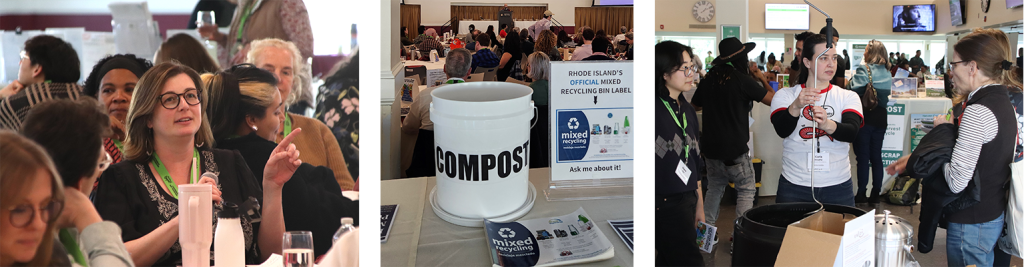
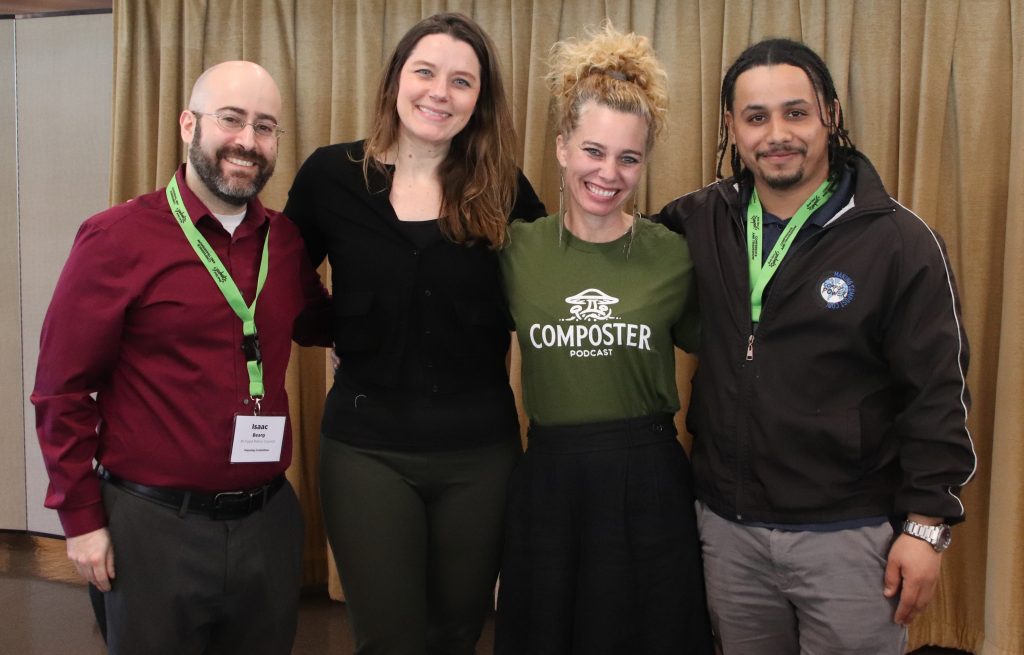
From left: Isaac Bearg, RIFPC’s program director for food, climate & environment, who directed the conference; Michelle Carnevale, president of 11th Hour Racing, a conference sponsor; Jayne Merner, a Rhode Island farmer and creator of The Composter podcast; and keynote speaker Domingo Morales, founder and CEO of Compost Power.
Our People
Board of Directors
Diane Lynch, President
Steven J. Arthurs
Courtney Bourns
Amber Jackson
Dominique Resendes
Julius Searight
Charlene Traynum
Thea Upham
Staff
Nessa Richman Executive Director
Josh Daly Associate Director
Rachel Newman Greene Program Director for Food Access & Nutrition Security
Isaac Bearg Program Director for Food, Climate & Environment
Rozalia Schleining Program Director for Food Business & Economic Development
Max Mason DeFaria Program Manager for Food Access & Nutrition Security
Allison Montagnon Engagement Manager
Interns
Joleen Owusu-Sekyere
Madeleine Lee
Olivia Capriotti
Financials
FY 2025: 1/1/2025-12/31/2025
REVENUE
EXPENSES
FUNDING PARTNERS
Our funding partners are critical to our success. We are grateful for their ongoing support, which allows us to leverage innovative, inclusive ideas that create solutions to complex challenges, and foster a healthier, more prosperous food system in Rhode Island, as well as the Northeast region.
- 11th Hour Racing Foundation
- Angell Foundation
- Henry P. Kendall Foundation
- Island Foundation
- Point32Health Foundation
- Rhode Island Foundation
- UNFI Foundation
- USDA Agricultural Marketing Service
- USDA National Institute of Food & Agriculture
- USDA Rural Development